Palm Oil: Nutritional Attributes and Health Relevance
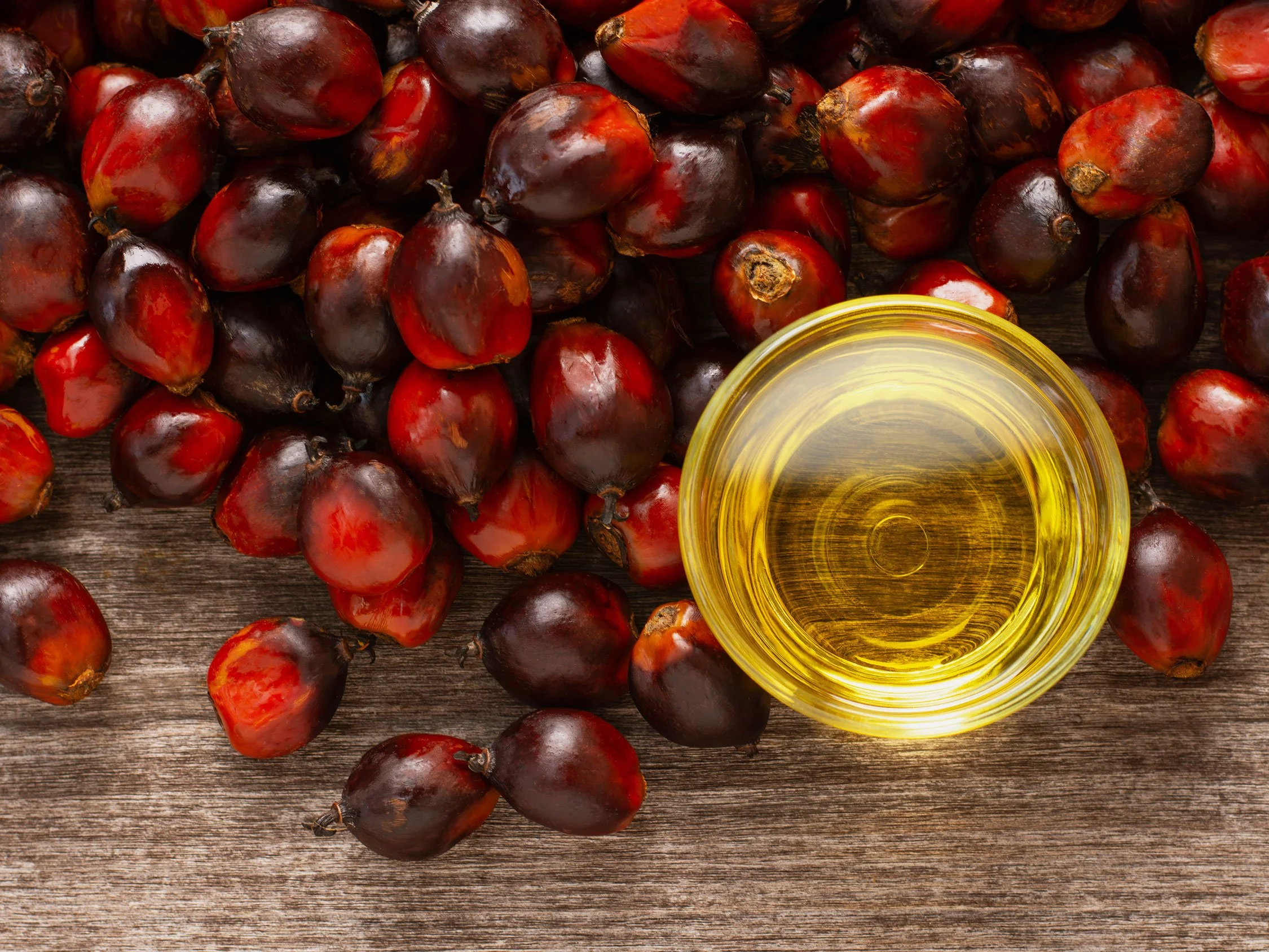
Palm oil plays an important role in meeting global demand for edible oils and fats. Beyond its widespread use, the source material positions palm oil as a nutritionally complex oil—one that combines a balanced fatty acid composition with naturally occurring phytonutrients such as carotenoids and vitamin E tocotrienols.
A widely used oil with a balanced composition
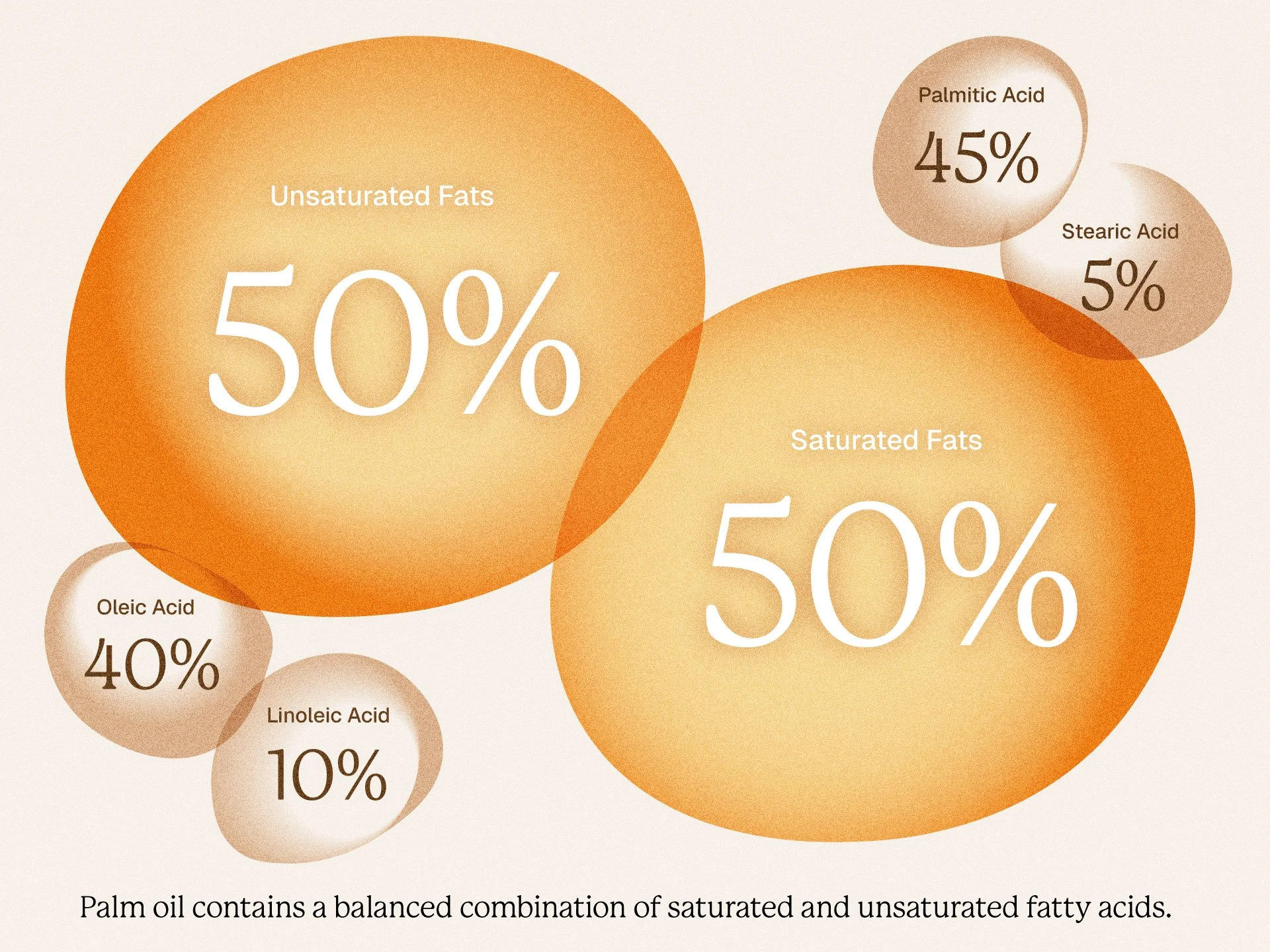
Palm oil has a balanced fatty acid profile, consisting of approximately equal proportions of saturated and unsaturated fats. Its main saturated fatty acids are palmitic acid and stearic acid, while its unsaturated fatty acids include oleic acid and linoleic acid.
This balance is an important part of how palm oil should be understood nutritionally. It offers a more complete perspective than the common assumption that palm oil consists only of saturated fat.
Palm Oil: A Balanced Fatty Acid Profile
Beyond fats: the role of phytonutrients
Palm oil also contains a range of naturally occurring phytonutrients. These include vitamin E tocotrienols, provitamin A carotenoids, phytosterols, coenzyme Q10, and other antioxidant compounds.
Together, these components broaden the nutritional profile of palm oil beyond fatty acid composition alone. They position palm oil not simply as a source of energy, but as an oil with wider nutritional relevance.
Red palm oil and provitamin A carotenoids
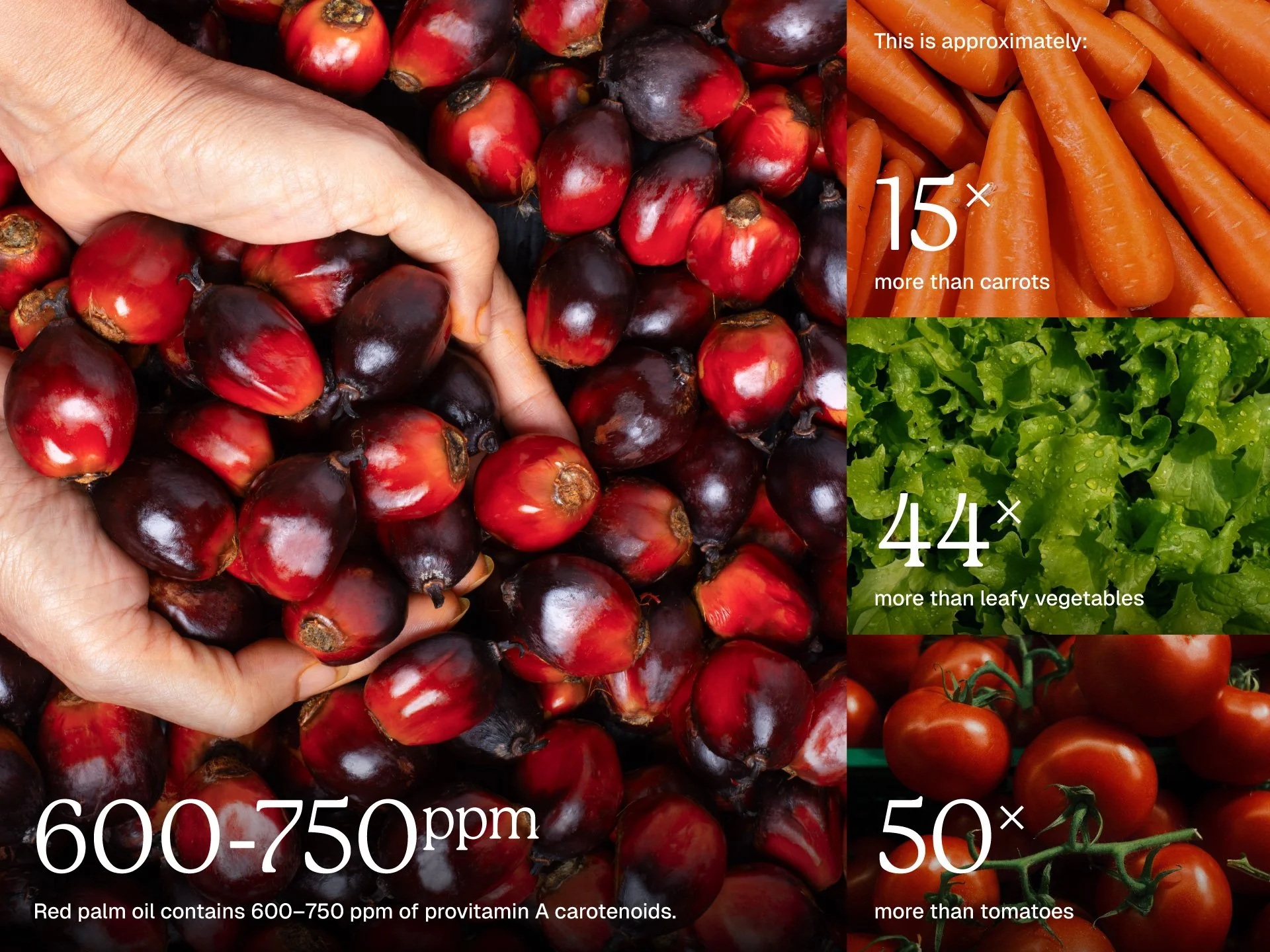
Crude palm oil is a particularly rich natural plant source of provitamin A carotenoids. Through specialised refining, red palm oil retains a substantial proportion of these carotenoids and vitamin E, making it one of the most nutrient-dense edible oils.
Red palm oil is a particularly rich source of provitamin A carotenoids, containing around 600–760 ppm. Compared with familiar plant foods, it contains 15 times more carotenoids than carrots and 50 times more than tomatoes.
Red Palm Oil and Provitamin A Carotenoids
Tocotrienols as a distinctive vitamin E fraction
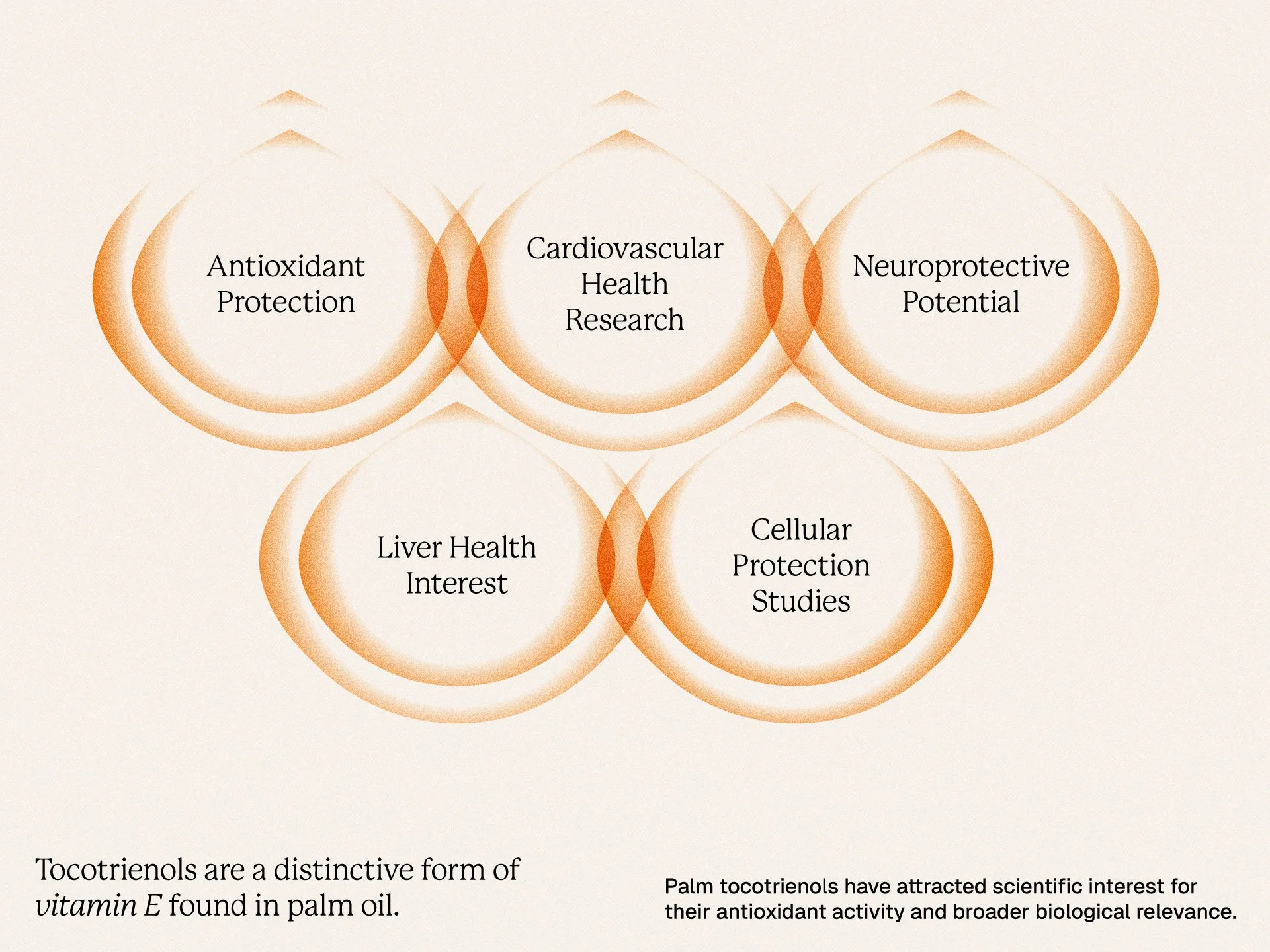
Palm oil is also notable for its vitamin E profile. A substantial portion of its vitamin E is made up of tocotrienols, while many other vegetable oils contain mainly tocopherols.
Palm tocotrienols are valued for their antioxidant properties and their broader biological relevance. Areas of interest include antioxidant protection, cardiovascular health research, neuroprotective potential, liver health interest, and cellular protection studies.
Palm Oil: A Source of Vitamin E Tocotrienols
Palm oil, heart disease and obesity: a question of context
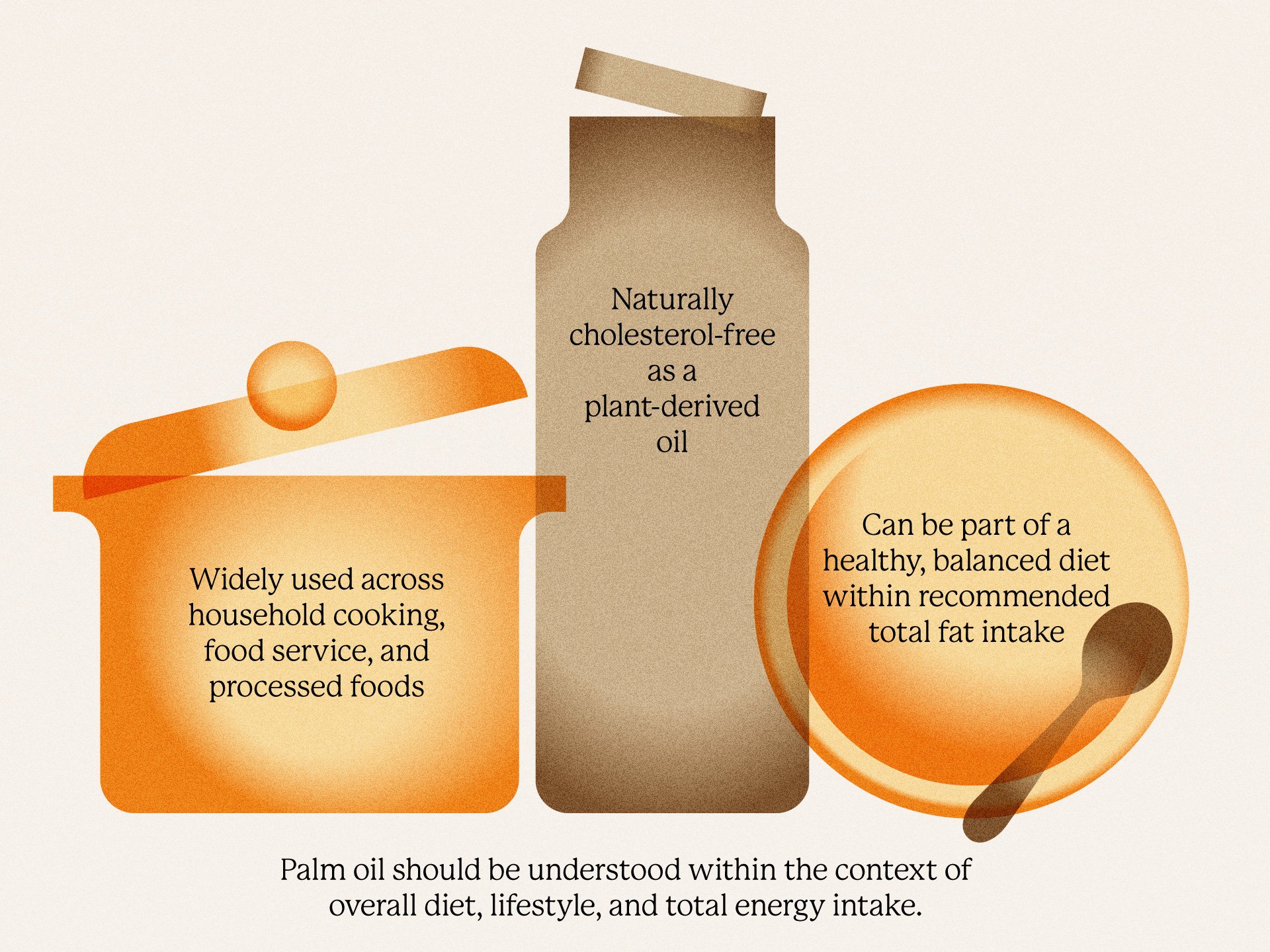
Palm oil is often discussed in relation to heart disease and obesity, particularly because of its saturated fat content. A more balanced view considers palm oil within the context of overall diet, lifestyle, and total fat intake.
As a plant-derived oil, palm oil is naturally cholesterol-free. It is also widely used in Malaysia across household cooking, food service, and processed foods. Within recommended total fat intake, palm oil can be part of a healthy and balanced diet.
Palm Oil in the Context of Heart Health and Obesity
A more complete view of palm oil
Palm oil is best understood through both its composition and its context. Its nutritional relevance cannot be reduced to a single nutrient or a single health concern.
A fuller understanding considers its fatty acid profile, its phytonutrients, and the dietary patterns in which it is consumed.
Palm oil is more nutritionally layered than it is often assumed to be. With a balanced fatty acid profile and a naturally occurring mix of phytonutrients, it remains relevant not only in food systems and cooking, but also in wider conversations around nutrition and health.
ReferenceMalaysian Palm Oil Council (MPOC). Palm Oil: Nutritional Attributes, Health and Well-Being Promoting Potentials. Highlights the balanced fatty acid composition of palm oil and its content of carotenoids, tocotrienols, and other phytonutrients. [mpoc.org.my]
Harvard Health Publishing. By the way, doctor: Is palm oil good for you? Discusses palm oil's fatty acid profile, saturated fat content, and implications for cardiovascular health. [health.harvard.edu]
Martin, J.J.J., et al. (2026). Palm oil: a review on nutritional composition, processing, contaminants, and sustainability frameworks in the food system. Frontiers in Plant Science. Reviews the nutritional composition of palm oil, including tocotrienols, carotenoids, and phytosterols, and discusses health considerations. [pmc.ncbi.nlm.nih.gov]